


Roth IRA Conversions: How to Save Hundreds of Thousands in Retirement Taxes
October 30, 2026


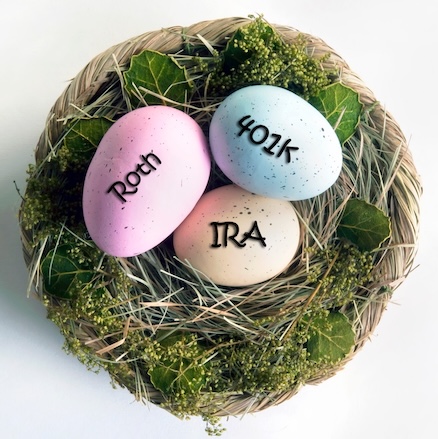
Your traditional IRA and 401(k) might look impressive on your statements, but a hidden partner is sharing in your success: the IRS. Every dollar in those accounts represents a future tax obligation that could devastate your retirement income.
Roth IRA conversions provide a powerful solution to alleviate this tax burden. By strategically moving money from traditional retirement accounts to Roth IRAs, you can save hundreds of thousands of dollars in taxes throughout your lifetime.
A Roth IRA conversion transfers money from your traditional IRA, 401(k), or other pre-tax retirement account directly into a Roth IRA. You pay income taxes on the converted amount in the year of the conversion, but then enjoy tax-free growth and withdrawals for life.
The Roth IRA was created to provide Americans with an after-tax retirement savings option that offers significant advantages. Once money is deposited into a Roth IRA, it grows tax-free. You'll never owe taxes on withdrawals, and there are no required minimum distributions during your lifetime.
Under current law, your beneficiaries can inherit Roth IRAs and enjoy up to 10 years of continued tax-free growth before they must withdraw the funds.
Real numbers tell the most compelling story. Consider the pair of educators who came to us having accumulated close to a million dollars in pre-tax retirement accounts. When B.O.S.S. Retirement Solutions analyzed their situation, the projections were sobering.
Without any tax planning, this couple faced over a million dollars in lifetime taxes. These taxes would come from required minimum distributions, taxes on unused assets still in the account, and taxes when assets are passed to their family.
By implementing a strategic Roth conversion plan over five to six years, they could reduce their total tax obligation to approximately $300,000 to $350,000. That represents potential savings of $700,000 that stays in their family instead of going to Uncle Sam.
This 70% tax savings ratio appears consistently across different account sizes. Whether you have $300,000, $500,000, or $1 million in retirement savings, strategic conversions typically save around 70% of your lifetime tax burden.
Many people celebrate when their 401(k) grows, not realizing they're compounding their future tax obligation. Every dollar of growth in a traditional retirement account represents additional taxable income you'll eventually owe.
If the stock market grows 23% in a year, as it did recently, your tax problem grows by 23% too. That million-dollar account becomes a $1.23 million tax obligation.
With Roth conversions, you can break this cycle. Pay taxes on today's balance at current rates, then watch your money grow tax-free forever.
Traditional retirement accounts force you to start withdrawing money at age 73, whether you need it or not. These required minimum distributions can push you into higher tax brackets and trigger a cascade of additional taxes.
Roth IRAs have no required minimum distributions during your lifetime. This gives you complete control over your retirement income and tax situation. You can let the money grow as long as you want, or withdraw it when it makes the most sense for your situation.
Successful Roth conversions require careful planning to minimize the immediate tax impact. The key is understanding tax brackets and methodically moving money over multiple years.
For example, suppose you're earning $150,000 annually and current tax brackets allow up to $400,000 in income at favorable rates. In that case, you have approximately $250,000 of "room" for conversions each year while staying in lower brackets.
This strategic approach, known as "metering," enables you to pay conversion taxes at optimal rates rather than being pushed into the highest brackets with large one-time conversions.
Many people attempt do-it-yourself conversions and make expensive errors. One investor learned about Roth conversions and decided to handle the process himself. He cashed out his entire IRA and deposited the funds into his checking account, planning to contribute the annual maximum to a Roth IRA each year.
This approach revealed two critical misunderstandings. First, annual contribution limits of $7,000 to $8,000 apply only to new money going into retirement accounts. Conversions have no yearly limits whatsoever.
Second, by cashing out his IRA completely, he triggered immediate taxes on the entire amount and lost the opportunity for continued tax-deferred growth on money he couldn't convert immediately.
At the other extreme, a business owner invested $700,000 in a Roth IRA in a single year without professional guidance. He maxed out his tax brackets and triggered Medicare premium increases that persisted for years. Proper planning could have spread this conversion over multiple years at much lower total tax cost.
Roth conversions involve complex interactions between tax brackets, estimated tax payments, Medicare premiums, and Social Security taxation. Working with B.O.S.S. Retirement Solutions brings crucial knowledge to the process.
Professional guidance helps you:
The tax code details and bracket calculations require expertise that most investors don't possess. Small mistakes can result in thousands of dollars in unnecessary taxes or penalties.
Age 59½ often represents the ideal time to begin Roth conversions. At this age, you can access converted funds without early withdrawal penalties, and you typically have several years before required minimum distributions begin at age 73.
This window between 59½ and 73 provides maximum flexibility for strategic planning. You can convert larger amounts while potentially being in a lower tax bracket, before required distributions force additional taxable income.
If you're still working and earning a high income, you might wait until retirement when your tax bracket drops. However, if you expect to have substantial retirement income from pensions or other sources, converting while still working might make sense.
Focus on years when income drops, such as between retirement and when you start claiming Social Security. This creates conversion opportunities at lower tax rates.
Consider converting lump-sum distributions to Roth status rather than receiving lifetime pension payments that create ongoing tax obligations.
Use lower-income years or sell-down periods to execute large conversions when tax brackets are most favorable.
Coordinate conversions with Social Security timing and spousal benefit strategies to minimize overall household taxes.
Roth IRAs provide superior estate planning advantages compared to traditional retirement accounts. Your heirs inherit Roth accounts with no immediate tax obligations and can stretch tax-free growth for up to 10 years under current law.
Traditional retirement accounts create immediate tax burdens for beneficiaries, often at their highest-earning years, when tax rates are most painful. Converting to Roth status eliminates this problem.
Market downturns create exceptional conversion opportunities. When your account values are temporarily depressed, you can convert more shares for the same tax cost. When markets recover, that recovery happens in your tax-free Roth account.
Recent market volatility has reminded investors of this principle. Those who converted during market lows have watched their tax-free accounts recover fully, avoiding taxes on the rebound.
Roth IRA withdrawals don't count toward the income calculation that determines Social Security taxation. This means Roth income won't push you over the thresholds that make up to 85% of your Social Security benefits taxable.
Strategic conversion planning can help you maintain tax-free Social Security benefits while meeting your retirement income needs entirely from tax-free sources.
Can I convert my entire 401(k) to a Roth IRA?
Yes, but converting large amounts in one year often triggers higher tax brackets. Most people benefit from spreading conversions over multiple years to minimize their total tax liability.
What if I need the money I just converted?
Converted principal can be withdrawn tax and penalty-free after five years. However, early withdrawal of growth may trigger penalties, so plan conversions carefully.
How do I pay taxes on a large Roth IRA conversion?
You can pay from the converted amount or other savings. Paying from outside sources keeps more money working in your Roth account, but it isn't always necessary.
Can I undo a Roth conversion if I change my mind?
Conversion recharacterizations were eliminated in recent years. Once you convert, the decision is permanent, making proper planning even more critical.
Do Roth conversions affect Medicare premiums?
Yes, conversion income counts toward the calculations that determine Medicare premium surcharges (IRMAA). Proper planning helps avoid or minimize these penalties.
Should I convert if I think tax rates will be lower in the future?
Even if tax rates decrease, Roth conversions provide valuable benefits, including no required minimum distributions, tax-free growth, and estate planning advantages.
Roth IRA conversions represent one of the most powerful wealth preservation strategies available to American families. The potential to save hundreds of thousands of dollars in lifetime taxes makes conversion planning essential for anyone with substantial traditional retirement savings.
The key is implementing conversions strategically, with professional guidance, over multiple years to minimize the immediate tax impact while maximizing long-term benefits.
Your traditional retirement accounts don't have to remain joint accounts with the IRS forever. Take control of your tax destiny and convert those future tax obligations into a lifetime of tax-free income.
Ready to discover your Roth conversion opportunities? B.O.S.S. Retirement Solutions provides a comprehensive analysis showing exactly how much you could save with strategic conversions. Call 800-637-1031 for your free customized analysis, or click here to get the free report. Every year you wait could mean thousands more in unnecessary taxes.
The Framework for a More Confident Retirement
Designed to deliver simplified, personalized financial strategies, The B.O.S.S. Retirement Blueprint™ planning process helps maximize income, growth and legacy while minimizing taxes. Ready to view your retirement from a new angle?
