

The Roth Conversion Strategy That Could Save You Six Figures in Retirement Taxes
October 12, 2026

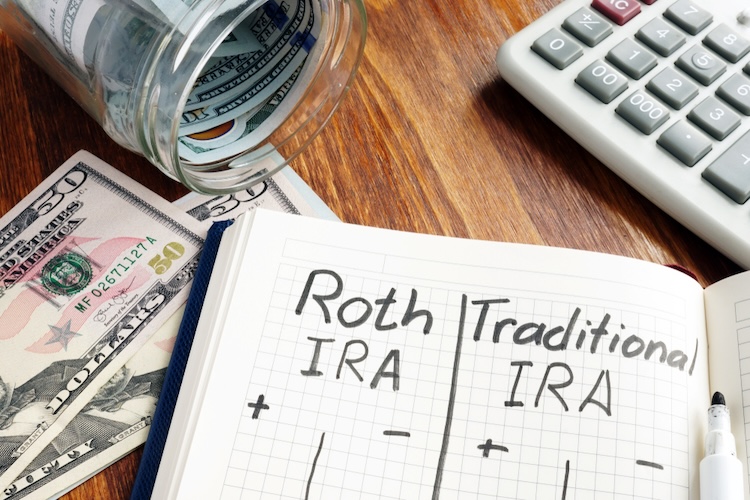
Most people know their IRA and 401(k) contributions grew tax-deferred, but far fewer realize what that actually means once retirement arrives: every dollar withdrawn gets taxed as ordinary income. A Roth conversion can help change that picture, but it has to be done carefully and strategically to avoid an unnecessary tax bill. In this post, we walk through how Roth conversions work, why timing matters so much, and what a coordinated approach could look like for your own retirement. If you'd like to see what this could mean for you, our team offers a free, personalized Roth Conversion Analysis.
Throughout your career, contributing to a traditional IRA or 401(k) came with a nice tax break, and that money grew without being taxed along the way. But tax-deferred is not the same thing as tax-free. When you retire and start withdrawing from these accounts, every dollar you pull out, both your original contributions and all the growth on top of them, gets taxed as ordinary income. Not capital gains rates, not a special retirement rate. Ordinary income, just like a paycheck.
We call this the tax torpedo. It's one of the most common surprises we see with new clients: they assume they'll be in a lower tax bracket in retirement, and often that assumption doesn't hold up once Social Security, RMDs, and other income sources are added into the mix.
One pattern we see often: someone starts taking withdrawals from their IRA or 401(k) to cover living expenses, then realizes they need to withdraw even more just to cover the taxes on what they already took out. It's what we call the double dip, and it can accelerate how quickly retirement savings get drawn down.
A Roth conversion works differently. You pay taxes upfront, at the time of conversion, based on your current tax bracket. From that point forward, the money grows tax-deferred and can be withdrawn completely tax-free, with no required minimum distributions forcing you to pull money out on the government's timeline.
One of the more striking real-world examples of Roth growth involves Peter Thiel, co-founder of PayPal. In 1999, before the dot-com crash, he purchased 1.7 million shares of his own company for a fraction of a cent per share, inside a Roth IRA. At the time, those shares were worth almost nothing. PayPal went on to grow substantially, and that account has since been reported to be worth billions of dollars, all of it potentially tax-free under Roth rules.
This is an extreme example and won't reflect a typical outcome. Most people aren't going to see growth like that. But it illustrates the core principle: money inside a Roth account grows without the tax drag that comes with a traditional IRA or 401(k), and depending on how it's structured, withdrawals can come out tax-free as well.
We say this often, and we mean it: a Roth conversion is not something to handle on your own. We've seen people move their entire IRA and 401(k) balance into a Roth in a single year without realizing how large the resulting tax bill would be. Converting strategically, spread across multiple years and coordinated with your tax bracket, Social Security timing, and Medicare thresholds, can make a significant difference in how much you actually pay.
Tom and Linda (names changed) came to us a few years before Tom planned to retire, with the bulk of their savings sitting in traditional 401(k) accounts. They liked the idea of a Roth conversion but weren't sure where to start, and they were wary of triggering a large tax bill in a single year.
We built a multi-year conversion plan that targeted specific tax brackets each year, timed to happen before Social Security and Medicare began, spreading the tax impact out rather than concentrating it all at once. Every situation is different, and results depend on individual tax circumstances, but having a structured plan gave them a much clearer sense of what to expect and when.
A few things worth thinking through as you consider whether a Roth conversion could make sense for you:
Converting before you start Social Security and Medicare can help you avoid pushing those income thresholds higher than necessary.
Spreading conversions across multiple years, rather than doing it all at once, can help you stay within a favorable tax bracket.
Not every situation benefits significantly from a Roth conversion. In some cases the difference is modest, which is exactly why a personalized analysis matters more than a general rule of thumb.
A Roth conversion involves moving money from a traditional IRA or 401(k) into a Roth account. You pay taxes on the converted amount in the year of conversion, and from that point forward, the money can grow and potentially be withdrawn tax-free.
Not necessarily. The benefit depends on your current and projected tax bracket, your timeline to retirement, and your overall income sources. A personalized analysis can help determine whether it makes sense for your situation.
Technically yes, but doing it without a coordinated strategy can lead to unnecessarily large tax bills. Working with an advisor to spread conversions across multiple years and tax brackets can help minimize the impact.
No. Roth IRAs are not subject to RMDs during the original owner's lifetime, which gives you more control over when and how much you withdraw.
A Roth conversion could be one of the more powerful tools available for reducing your tax burden in retirement, but it has to be approached carefully. Our team offers a free, personalized Roth Conversion Analysis that shows you what your projected taxes could look like with your traditional accounts compared to converting to a Roth, so you can make an informed decision for your family. Click here to unlock your savings.
Or call us directly: (800) 637-1031
Ryan Thacker is the Co-Founder of B.O.S.S. Retirement Solutions and B.O.S.S. Retirement Advisors, a fiduciary RIA based in Lehi, Utah. Alongside his brother Tyson, Ryan has helped more than 55,000 area families across Utah, Idaho, Washington, and Arizona build retirement income strategies focused on maximizing income, minimizing taxes, and protecting what they've worked a lifetime to build. B.O.S.S. currently manages more than $1 billion in retirement assets across 11 office locations.
Advisory services offered through B.O.S.S. Retirement Advisors, an SEC-Registered Investment Advisor. Insurance products and services offered through B.O.S.S. Retirement Solutions. Information contained in this material is for informational purposes only and is not intended as personalized investment, tax, or legal advice. You should seek advice on legal and tax questions from an independent attorney or tax advisor. Examples and hypothetical scenarios are illustrative only and do not guarantee future results. Actual results may vary. The information is not intended to be used as the sole basis for financial decisions, nor should it be construed as advice designed to meet the particular needs of any individual. BOSS is not affiliated with the Social Security Administration, the U.S. government, or any government agency.
Related Resources from B.O.S.S. Retirement Solutions:
The Framework for a More Confident Retirement
Designed to deliver simplified, personalized financial strategies, the B.O.S.S. Retirement Blueprint™ planning process helps maximize income, growth and legacy while minimizing taxes. Ready to view your retirement from a new angle?