

What Happens to Your IRA and 401k at Age 73: RMD Rules Explained Clearly
September 15, 2026

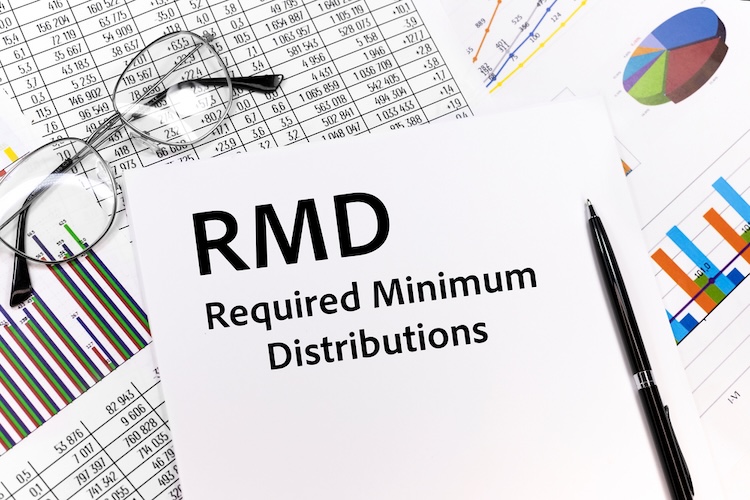
Required minimum distributions, or RMDs, force you to start withdrawing from your IRA and 401k at age 73, whether you need the money or not. The amount grows every year, the timing can work against you in a down market, and the tax impact can spill over into your Social Security and Medicare costs. The good news is that with the right plan in place before you retire, you can take back control. Learn more in our Retirement Planning guide.
For decades, the advice was simple. Contribute to your IRA or 401k, get the tax break now, and worry about the rest later. We hear this from clients all the time, hard working people who did exactly what they were told, put money away year after year, and assumed that discipline alone would carry them through retirement.
What often gets left out of that conversation is what happens on the other end. Once you turn 73, the IRS requires you to start withdrawing from your IRA and 401k, and that withdrawal isn't optional. It's called a required minimum distribution, or RMD, and understanding how it works can make a real difference in how much of your savings you actually get to keep.
Dave spent 32 years working as a maintenance supervisor at a manufacturing plant outside Boise. He and his wife, Carol, raised three kids on a steady paycheck and put a little into his 401k with every check, sometimes more when overtime allowed. By the time Dave retired at 65, he had built up a solid nest egg. He was proud of it. He'd done everything right.
What Dave didn't know was that at 73, the government would require him to start pulling money out of that account whether he needed it that year or not. He also didn't know that the amount he'd be forced to withdraw would increase every single year, or that the timing of those withdrawals relative to the stock market could either help him or hurt him significantly. Dave isn't alone. Most people we sit down with have never had this explained to them in plain terms.
Here's the basic mechanic. When you turn 73, the IRS requires you to begin withdrawing a specific percentage of your IRA and 401k balances every year. That percentage is set by a formula, and it increases as you age.
The idea is that the government has been waiting patiently while your money grew tax deferred, and eventually it wants its share. The RMD is how that happens. If you don't take the distribution, you can face a steep penalty, so this isn't something you can put off or ignore.
The part that surprises people most is that this isn't a one time event. It repeats every year, and the required amount grows and compounds over time. For someone like Dave, that means the pressure builds each year he's in retirement, regardless of what else is happening in his life or in the markets.
This is where things get more complicated, and where a lot of retirement plans run into trouble.
Imagine Dave retires right as the stock market is near a high point. His RMDs come out, the market keeps climbing, and his account balance holds up reasonably well even with the withdrawals. That's one scenario.
Now imagine the opposite. Dave retires, and shortly after, the market drops 30 or 40 percent. He's no longer contributing to that account. He's required to withdraw money for his RMD whether the market is up or down. And if he needs additional income on top of that RMD, he could be pulling even more out of an account that's already lost significant value.
"That's a recipe to run out of money far sooner than you thought possible."
This is often referred to as sequence of returns risk, and it's one of the most overlooked factors in retirement planning. The order in which market gains and losses happen, relative to when you start withdrawing, can matter just as much as the average return over time.
Taxes on the distribution itself are only part of the picture. RMD income doesn't exist in a vacuum. It stacks on top of whatever other income you have coming in during retirement, whether that's Social Security, a pension, or other investment income.
As all of that income adds up, it can push you into a higher tax bracket than you expected. It can also increase how much of your Social Security benefit is subject to tax, and it can raise your Medicare premiums. For someone who spent their career trying to keep expenses predictable, this kind of stacking effect can feel like it came out of nowhere.
There's another layer to this that catches many families off guard. It's common for one spouse to pass away sometime in their seventies. When that happens, the surviving spouse has to shift from filing taxes as married filing jointly to filing as a single person.
That change alone can push the surviving spouse into a higher tax bracket, even while they're still required to take the same RMDs from the accounts. This is sometimes called the widow's penalty, and it's one of the most overlooked consequences of not having a distribution plan in place ahead of time. For Carol, this could mean a meaningfully different financial picture than the one she and Dave built their retirement around together.
Here's where the conversation shifts. RMDs feel like something that happens to you, but with the right planning, they don't have to.
"You've got more control over how much you pay in taxes right now than at any other time in your retirement life. You just gotta understand how this works."
One strategy worth understanding is converting a traditional IRA or 401k into a Roth account. This means paying taxes on the money now, while you may have more control over your tax situation, in exchange for tax free withdrawals later. The right approach depends heavily on your specific accounts, your income, and your timeline, so there's no single formula that works for everyone.
The key is starting this conversation before RMDs kick in, not after. A plan built ahead of time gives you room to make thoughtful decisions about when to convert, how much to convert, and how that fits alongside your Social Security timing and any pension income.
"There is no one size fits all situation."
For a family like Dave and Carol, a customized plan might look at every account they hold, IRAs, 401ks, a pension, and any other savings, and map out a strategy for how and when to draw from each one. That could include a multi year Roth conversion plan, a specific order for tapping different accounts, and decisions about when to start Social Security for each spouse.
None of this eliminates the requirement to take RMDs, and there's no guarantee of a specific outcome since every situation is different. What thoughtful planning can do is help you understand your options and make more informed decisions before the choices are made for you.
RMDs begin at age 73 under current rules.
The IRS can impose a significant penalty on the amount you should have withdrawn but didn't, so this isn't something to overlook.
Certain strategies, like Roth conversions completed well before RMDs begin, may reduce or in some cases eliminate future RMDs from converted funds. Whether this makes sense depends on your individual situation.
Because RMD income counts toward your overall taxable income, it can increase the portion of your Social Security benefit that's subject to tax.
It refers to the shift in tax filing status, and often a higher tax bracket, that a surviving spouse faces after their spouse passes away, while still being required to take the same RMDs from retirement accounts.
If you want to see exactly how RMDs could impact your taxes in retirement and what strategies could help reduce that impact, we offer a free, customized B.O.S.S. Retirement Tax Savings Analysis. It's a straightforward, side by side look at what you're currently projected to pay in taxes versus what you might be able to save with the right plan in place. Reach out to get started, or click the link below.
Tyson Thacker is co-founder of B.O.S.S. Retirement Solutions and co-host of Retirement Solutions Radio. He and his brother Ryan help hard working families build retirement plans that account for taxes, timing, and the parts of retirement nobody explains clearly enough. Tyson believes retiring successfully doesn't happen by accident. It starts with a plan.
This article is for educational purposes only and does not constitute personalized financial, tax, or legal advice. Social Security rules and tax laws are subject to change. Individual results will vary based on personal circumstances. Consult a qualified financial professional before making any financial decisions. Advisory services offered through B.O.S.S. Retirement Advisors, LLC, an SEC-Registered Investment Advisor. Insurance products and services offered through B.O.S.S. Retirement Solutions. Our firm is not affiliated with the Social Security Administration, U.S. government, or any governmental agency.
Related Resources
The Framework for a More Confident Retirement
Designed to deliver simplified, personalized financial strategies, the B.O.S.S. Retirement Blueprint™ planning process helps maximize income, growth and legacy while minimizing taxes. Ready to view your retirement from a new angle?